Support Trees That Are Worth Saving
Tree cabling and bracing services in Tulsa to protect mature trees from structural failure
When a large tree on your property develops a split trunk, weak crotch, or storm damage, removal is not always the only option. You may have a mature shade tree in Tulsa that provides cooling, privacy, or curb appeal but shows signs of structural stress. RG Tree Service installs tree cabling and bracing systems to support weakened or split trees, reducing the risk of limb or trunk failure while allowing the tree to remain in place.
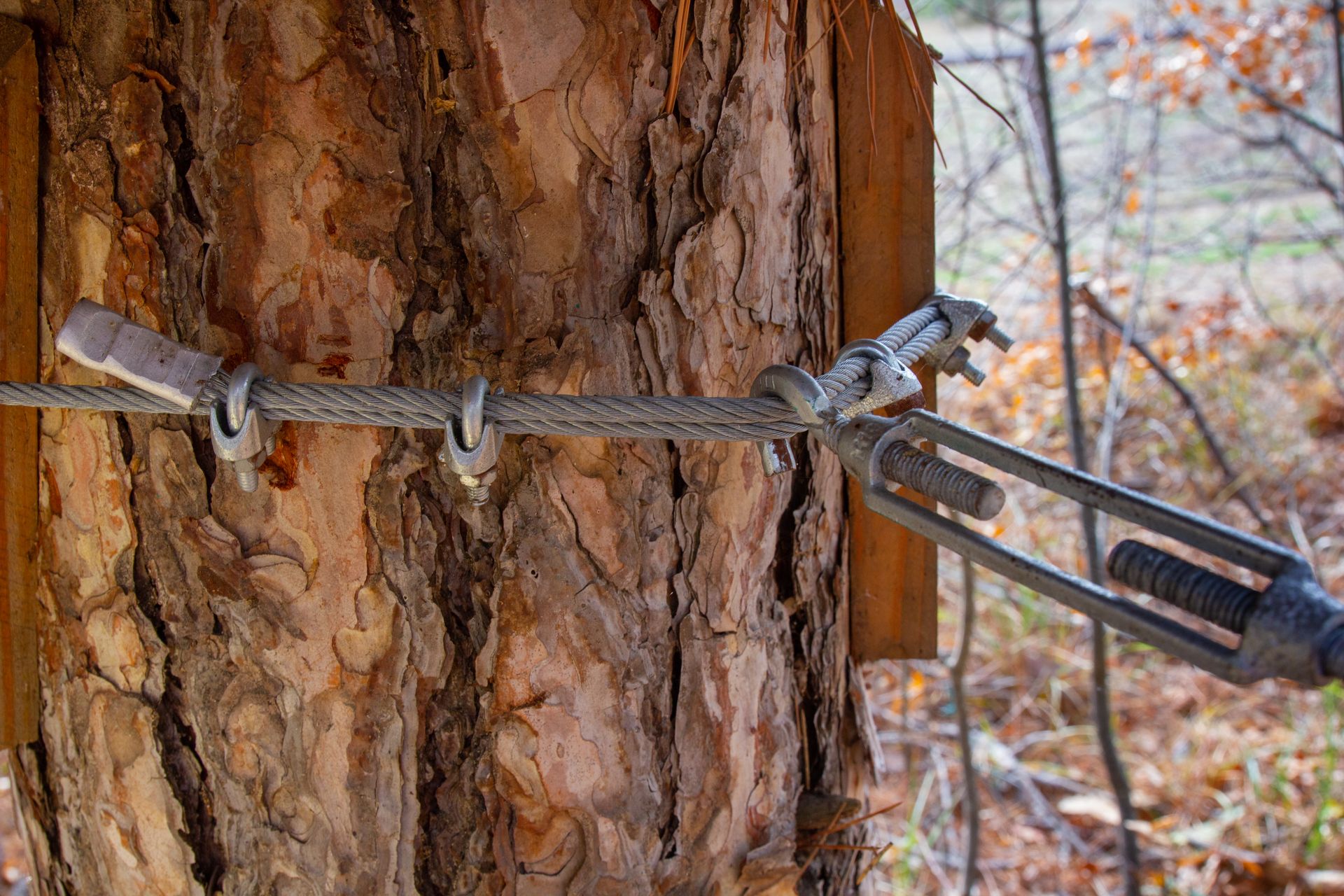
This service is often recommended after inspections identify structural issues that could worsen over time. Cabling involves installing flexible steel cables between major limbs or trunks to limit movement and redistribute weight. Bracing uses rigid rods to stabilize splits or cracks. Both systems are installed using proper hardware and placement techniques for long-term stability. This approach allows property owners to protect valuable trees without immediate removal, which is particularly beneficial for large shade trees common in Tulsa properties.
If you have a tree showing signs of stress or damage, contact RG Tree Service to schedule an assessment and find out if cabling is a viable alternative.
How support systems are installed and maintained
Your cabling or bracing project in Tulsa begins with a structural assessment to identify weak points, load imbalances, and attachment locations. Crews use climbing equipment or lifts to reach the canopy, then install hardware at specific points determined by the tree's architecture. Steel cables are tensioned to limit movement without restricting natural growth, and bracing rods are threaded through drilled holes to hold splits together.
After installation, you will notice the tree holds its shape more securely, especially during high winds or heavy foliage loads. The system does not make the tree indestructible, but it reduces the likelihood of catastrophic failure. Inspection and adjustment are recommended every few years to account for growth and hardware wear.
Cabling and bracing work best on trees with good overall health and a strong root system. The service does not repair decay, treat disease, or restore dead wood. If the tree is severely compromised, removal may still be the safer choice. RG Tree Service evaluates each case individually to determine whether support systems will extend the life of the tree without creating new risks.
Let us answer what you are wondering about
Property owners often want to know whether their tree is a good candidate for cabling, how long the system lasts, and what kind of maintenance it requires. These questions cover the most common concerns before installation.
If you want to preserve a mature tree showing signs of structural stress in Tulsa, RG Tree Service can assess the tree and install a support system designed for long-term stability. Reach out to schedule an inspection and discuss your options.